Full-Stack Web Application
Camping Resource Platform

Stage 1. Problem Definition & Requirements Gathering
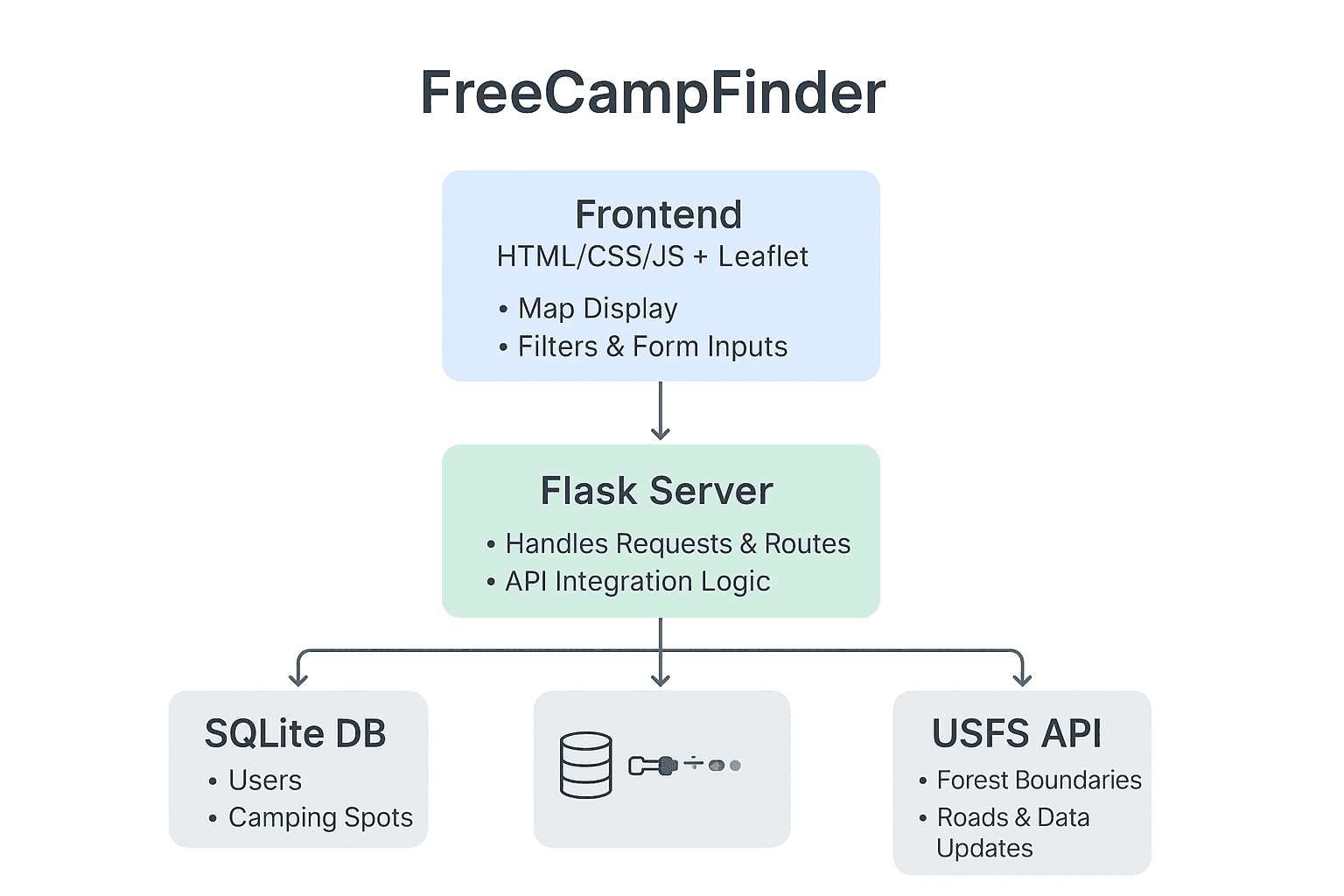
Identified a lack of centralized, reliable information for free camping spots across U.S. public lands. Conducted informal user research with fellow campers to define key needs: interactive maps, filtering by state, and easy community contributions. Developed user stories and planned the feature set based on these insights.
Stage 2. Backend Architecture & API Integration
Built the backend using Flask, SQLAlchemy, and SQLite, establishing a database for user accounts and camping spot entries. Integrated the US Forest Service (USFS) API to provide real-time forest boundaries and roads. Implemented authentication and session management for secure user interactions.
Stage 3. Front-End Design & Development
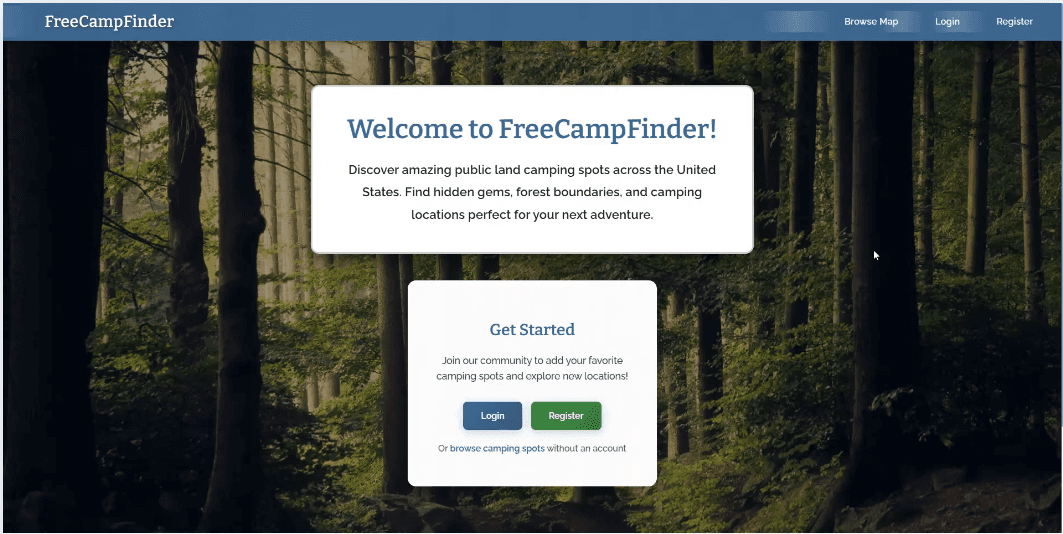
Responsive Design: Built mobile-friendly templates with HTML, CSS, and Jinja2, using glass morphism effects for a modern UI.
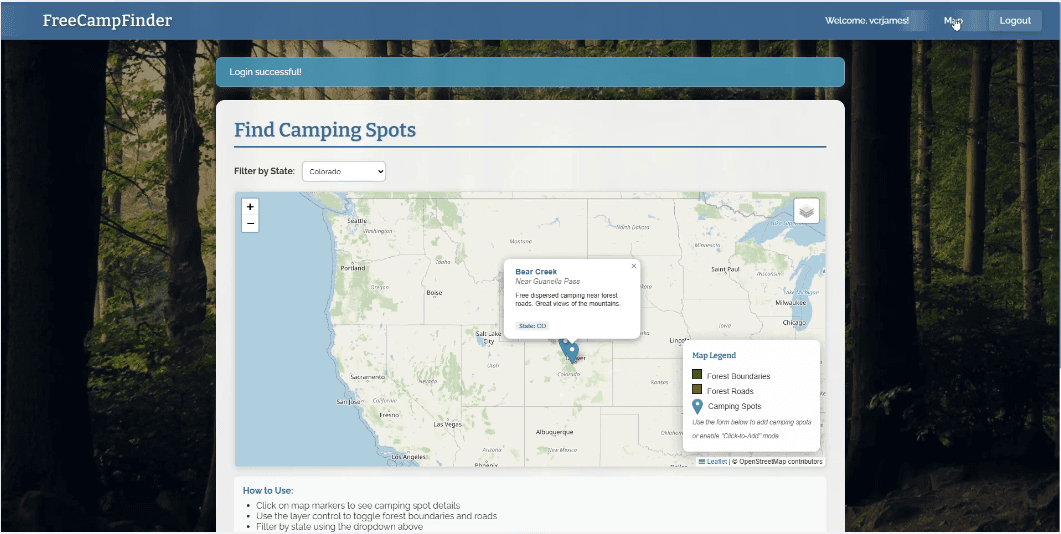
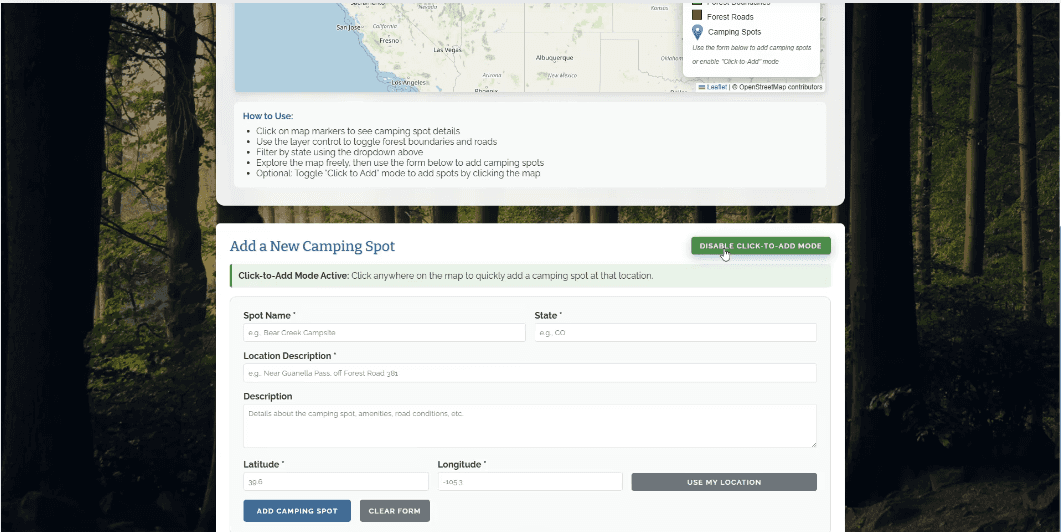
Filtering & Search: Enabled state-based filtering for all 49 states (including Alaska) and dual input methods (form + map click).
Interactive Map: Leveraged Leaflet.js with OpenStreetMap tiles to allow users to browse camping locations and add new spots directly on the map.
Stage 4. Feature Enhancement & Iteration
Tested the application with peers and Hackbright mentors to refine usability, map interactions, and spot-entry workflow. Iteratively improved UI elements, error handling, and map responsiveness based on feedback.Stage 5. Deployment & Documentation
Stage 5. Deployment & Documentation
Deployed the project to a live environment and documented the full stack setup, API integrations, and feature instructions. Created README and GitHub documentation to allow others to replicate or contribute.

Other projects

Nonprofit Digital Transformation
Salesforce Migration & Systems Rollout
User Research & Requirements Analysis
Requirements Analysis & Systems Design
Productivity Chrome Extension
Workflow Automation — Chrome Extension